Clearing Ivy and Brambles from an Overgrown Garden in Dereham: Reclaiming Space Safely
Struggling with ivy taking over your Norfolk garden? We clear ivy from walls, fences and ground across Norfolk and Suffolk. Call S.J.Pond Services.
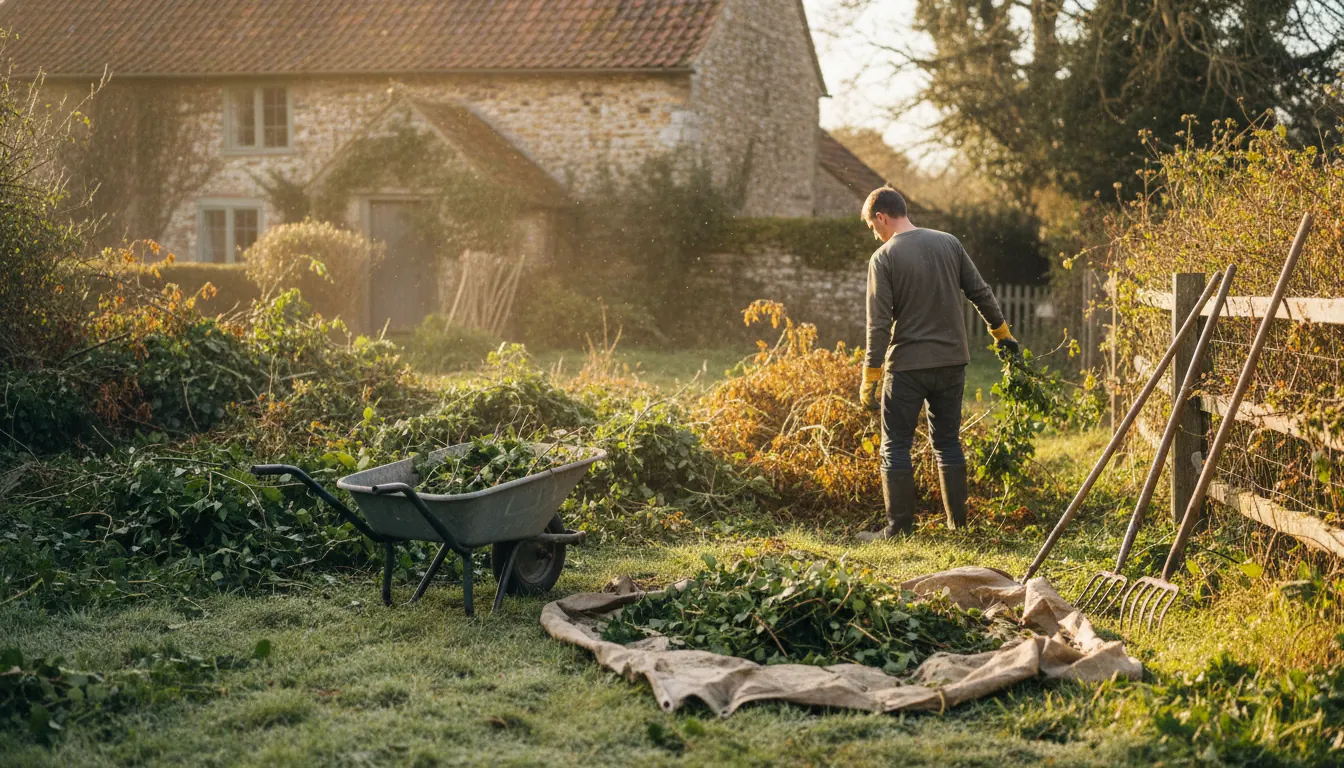
Ivy in a Norfolk Garden: Why It Gets Out of Hand So Quickly
Ivy is one of those plants that starts innocently enough. A few trailing stems along a fence, a bit of green on a bare wall, and suddenly you look out one morning and it has crept over the shed roof, buried the fence posts and is halfway up the oak at the bottom of the garden. That is not an exaggeration. We see it all the time across Norfolk and Suffolk, from older terraced gardens in Norwich to large rural plots outside Aylsham and Dereham.
The problem is that ivy does not pause. It roots into mortar, it works its way under fence panels, it smothers shrubs and it can eventually weaken the structures it climbs. Left long enough, what started as a manageable groundcover becomes a serious clearance job. If you are dealing with that right now, this article is for you.
What Makes Ivy So Hard to Remove Yourself
A lot of people start an ivy removal job thinking it will take an afternoon. Most of them are still pulling at it three weekends later.
There are a few reasons it is such a stubborn plant:
- The root system is extensive. Ivy roots can go surprisingly deep, often 30–60 cm or more in established plants, and the older the plant, the more anchored it becomes. The main stems thicken over years into something close to woody trunks.
- The aerial roots grip hard. When ivy climbs a wall or fence, it sends out tiny clinging roots that embed themselves into the surface. Pulling the stems away cleanly without damaging brickwork or timber takes care and patience.
- Cutting it back is not enough on its own. If you just trim the top growth, the root system below ground will push new shoots up within weeks. To actually stop it, you need to deal with the root crowns at ground level.
- Volume. A mature ivy patch can produce an enormous amount of material. We did one job near Norwich where the cleared ivy, stems and root material filled the van more than once. It is genuinely heavy, bulky work.
That is not to put you off having a go yourself if the patch is small. But for anything that has spread across a large area, climbed a wall or started to engulf fencing, calling someone in is usually the sensible option.
How We Approach Ivy Removal Across Norfolk and Suffolk
When we arrive at a job, the first thing we do is get a proper look at what we are dealing with. Is the ivy on a wall, a fence, a tree, or covering the ground? Has it got into the mortar? Are there fence posts underneath that need checking? All of that shapes how we work.
For wall ivy, we cut the main stems at ground level first and let the upper growth die back before removing it. This makes the aerial roots easier to detach without pulling chunks of mortar out with them. It takes a bit more time but it protects the wall.
For fence ivy, it is usually a case of clearing the growth carefully, then checking the condition of the panels and posts underneath. Ivy hides a lot of rot and damage. More than once we have pulled ivy back from a fence in Norfolk and found the posts were already gone at the base. If that is the case, we can deal with the fencing too. (You can read more about what to look for in our article on fencing installation and replacement in Suffolk.)
For ground ivy, the approach depends on how established it is. Younger growth can often be lifted and raked. Older, more rooted patches need more work, cutting back the top growth, then loosening the root crowns with a fork and pulling them out as completely as possible. Getting as much root out as you can is what slows the regrowth.
For ivy on trees, we remove the climbing stems carefully. We do not do tree surgery, but clearing ivy from the lower trunk and the base of a tree is straightforward garden clearance work and it does the tree a genuine favour.
Everything we clear goes into the van and away. You do not need to worry about bags, bins or trips to the tip.
What Customers Notice After Ivy Clearance
Mike, one of our customers, put it well:
"Sam worked miracles on our garden. He not only transformed our garden, but took away all of the cuttings, weeds and branches that were left over. Our garden looks completely different once Sam has finished. It's also amazing how much he gets done within the time. Sam is incredibly friendly and obviously loves gardening. I can recommend Sam in the highest terms!"
That reaction, the garden looking completely different, is something we hear a lot after an ivy clearance job. People forget what was underneath. Borders reappear. Fences come back into view. Walls look like walls again. It is one of those jobs where the before and after genuinely surprises people, and we always share photos on our Facebook page so you can see the kind of results we get.
Ivy Removal as Part of a Wider Garden Clearance
Ivy rarely comes alone. On most of the overgrown garden jobs we take on across Norfolk and Suffolk, ivy is part of a wider picture that includes brambles, self-seeded shrubs, years of accumulated growth and possibly a shed full of old tools and rubbish at the back. We are set up to deal with all of that in one visit or across a series of visits, whatever works best.
If you are tackling an overgrown plot and need help thinking about where to start, our article on reclaiming a neglected garden in Norwich covers the practical steps in more detail.
We cover the whole of Norfolk and Suffolk. Whether you are in Norwich, over in Lowestoft, out near Fakenham or down in Bury St Edmunds, we travel to the job.
A Word on Ivy and Neighbours
A question that comes up often is what to do when ivy is coming from a neighbouring garden. Legally, you are generally entitled to cut back any growth that crosses the boundary onto your side, but you should return the cuttings to your neighbour rather than disposing of them yourself. We are not solicitors and this is not legal advice, but that is the general understanding most people work to.
What we can do is clear the growth on your side of the boundary, trim it back neatly to the fence line and leave your garden looking tidy. If the situation is more complicated, a conversation with your neighbour first is always the better starting point.
Frequently Asked Questions
How deep do ivy roots go?
In established plants, the main roots can reach 30–60 cm or deeper. The older and thicker the plant, the more extensive the root system tends to be. This is why pulling the top growth alone rarely solves the problem long-term. Getting the root crowns out at ground level is what makes a real difference to regrowth.
What will permanently stop ivy coming back?
There is no completely permanent solution, but thorough root removal gives you the best chance. The more of the root crown you get out, the slower and weaker any regrowth will be. After a professional clearance, keeping an eye on the area and pulling out any new shoots early, before they re-establish, is the most effective long-term approach.
How do I deal with ivy that is coming from my neighbour's garden?
You are generally within your rights to cut back growth that has crossed onto your side of the boundary. The usual convention is to offer the cuttings back to your neighbour. We can clear the growth on your side of the fence and tidy the boundary up neatly, which at least means your garden is sorted regardless of what is happening next door.
Can ivy damage a fence or wall?
Yes, over time. On walls, the aerial roots can work into mortar joints, particularly in older brickwork. On timber fences, ivy traps moisture against the wood and accelerates rot. We often find that fence panels and posts hidden under heavy ivy are in worse condition than expected. Clearing the ivy sooner rather than later is always better for the structure underneath.
Get in Touch About Ivy Removal in Norfolk or Suffolk
If ivy has taken over a wall, fence, border or a large chunk of your garden, we can help. We cover the whole of Norfolk and Suffolk, we take everything away, and we leave the place looking genuinely different.
Give us a call on 07563 262753 or drop a WhatsApp to 07710 269392. We work Monday to Saturday, 7am to 6pm. No job too big or small.